
International project & supply guide ↗

PALMIYE LIGHTING · SOUTH AFRICA
Outdoor Lighting Poles for Projects in South Africa
Start with the consultant’s specification, then compare column forms and supply scope. Prepare a reviewable lighting-pole package for a municipal street, public precinct or private development in South Africa with our manufacturing team in Türkiye.
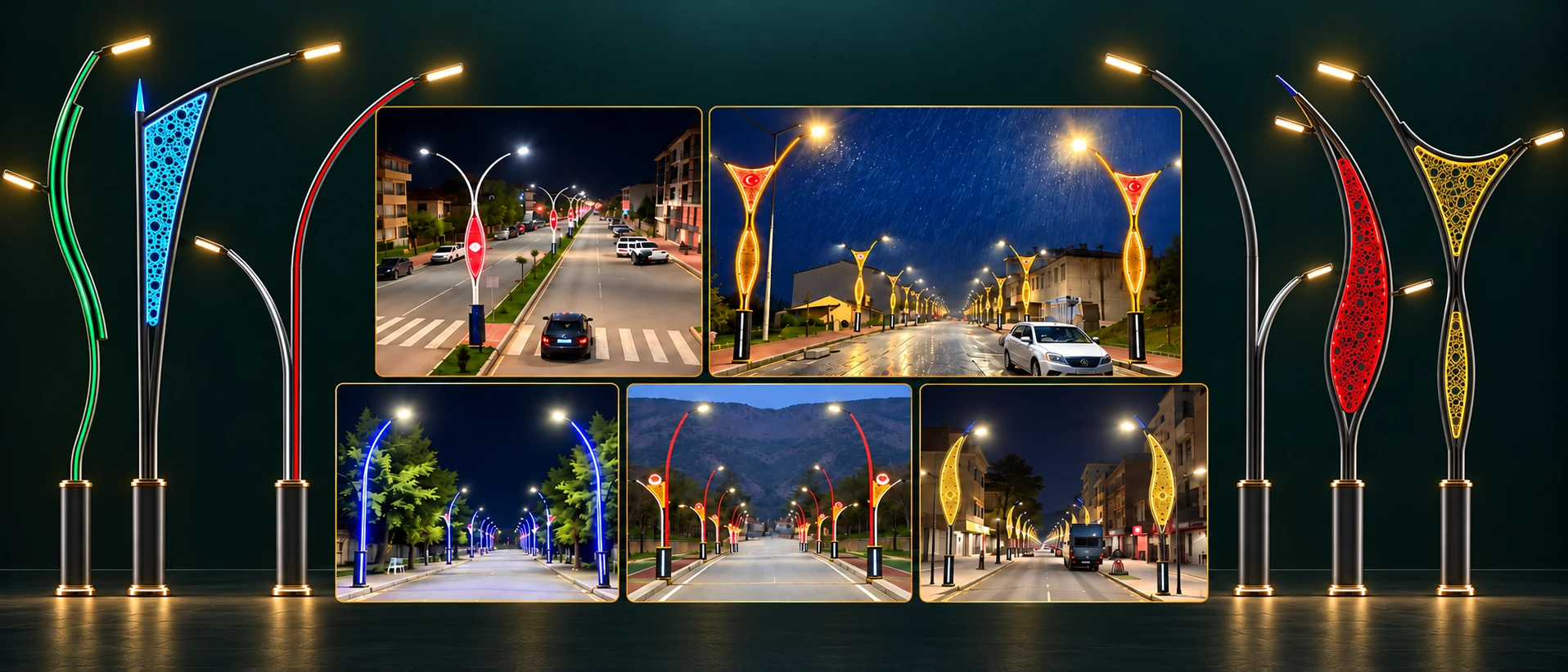
01 / A COORDINATED PRODUCT SHORTLIST
Match the Column to the Project Specification
Sourcing lighting poles for South Africa begins with the required application and acceptance criteria. An estate approach, a pedestrian precinct and a municipal road may share a finish while needing different heights, optics and maintenance arrangements. Use the collections below to shortlist forms, then identify the precise version and proposed luminaire.
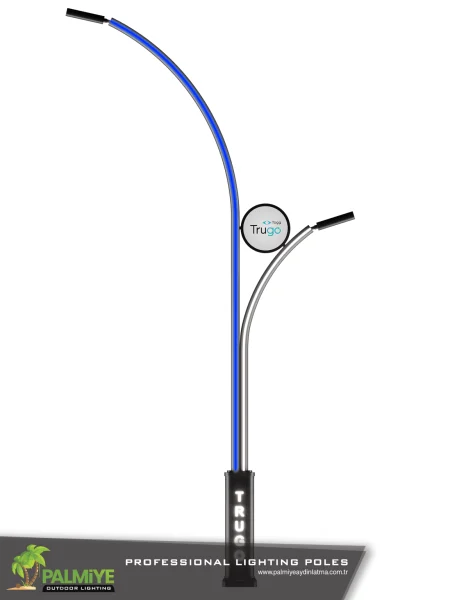
DARG V1
LED-Body Aluminium Poles
Compare architectural LED-body columns for public squares and development entrances, with their visual role documented separately from functional illumination.
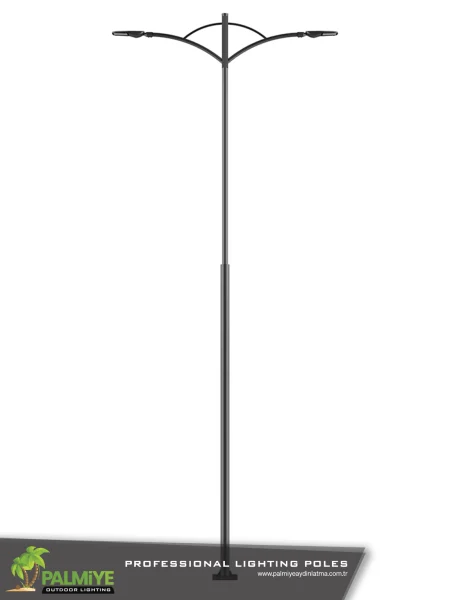
ROAD V2
Galvanised Steel Road Poles
Use the road-pole collection to shortlist height and bracket options against the consultant’s schedule and structural loading brief.
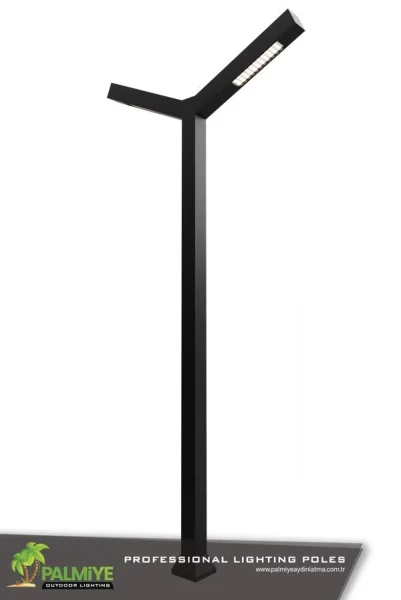
BARDI
Park and Garden Poles
Explore landscape models for precincts, pedestrian links and hospitality grounds, coordinated with planting and neighbouring façades.
Complete the shortlist with urban lighting poles, wall and post-top luminaires or bollards for pedestrian areas. Keep each application identifiable in the equipment schedule.
02 / CONSULTANT REVIEW MATRIX
Separate the Four Approval Packages
Before asking suppliers to price the same scope, divide the technical brief into column assemblies, luminaires and controls, site requirements and delivery. Record what is specified, what is proposed and what remains subject to approval. This prevents a comparison based on pole appearance from overlooking the equipment or documents needed for acceptance.
| Review package | Define in the specification | Confirm before approval |
|---|---|---|
| Column assembly | Material, height, outreach, finish and foundation interface. | Drawing revision, structural inputs and attachment loads. |
| Luminaire and controls | Optical selection, mounting, electrical supply and operating schedule. | Photometric files, control interface and required product evidence. |
| Site and maintenance | Exposure, access, spares and asset identification. | Protection system confirmation and maintenance responsibilities. |
| Commercial delivery | Quantity phases, named destination, freight and unloading. | Packing schedule, document checklist and agreed supply boundaries. |
For a public precinct with an adjoining access road, for example, schedule architectural columns separately from functional road lighting. The lighting designer should evaluate each luminaire distribution and mounting arrangement. List any integrated body illumination as its own electrical load and design feature.
03 / MUNICIPAL AND PRIVATE PROJECTS
Identify Who Accepts the Product Submission
Send the municipal or private project specification, document revision and the contact responsible for technical acceptance. A product selected for a private landscape should not be assumed to satisfy a public-road procurement schedule. Ask the reviewer to identify the required performance evidence and the applicable standards for the particular equipment.
Where SANS requirements or specific test references appear in the tender, include their exact numbers and scope with the enquiry. Request drawings and available technical records against the quoted version. Any required column criteria, including specified EN 40 provisions, should be addressed for the actual material, height, bracket and loading arrangement.
Record Alternatives Clearly
If a proposed model differs from the consultant’s schedule, list the difference and the evidence needed for review. Keep substitutions visible in the quotation rather than presenting a different height, finish or control arrangement as an equivalent without approval.
04 / COASTAL AND INLAND CONDITIONS
Select the Protection System from the Actual Site Brief
A coastal promenade and an inland business park should not inherit the same environmental assumptions. Provide the installation location, exposure description, operating-temperature range and maintenance regime. For coastal sites, identify the relevant salt-exposure requirements in the project specification and request confirmation of the proposed material and finish.
At open or exposed sites, include the engineer’s wind-design criteria and the mass and projected area of luminaires and accessories. Coordinate foundations, anchor geometry, cable entry and access-door position with the project engineer. Retained bases require assessment before a replacement assembly is approved.
Maintenance planning should cover safe access, cleaning, asset labels and the requested spare-component list. Ask which replaceable components are available for the chosen version and agree any spares supplied with the order. This makes the handover more useful to the operator than an unqualified service-life claim.
05 / ELECTRICAL AND PRODUCT EVIDENCE
Confirm the Relevant Documents Before Manufacture
Give the electrical designer’s supply, earthing, protection and control requirements with the selected luminaires. Identify any connection to a site management system and the party commissioning it. If the project has a particular operating or backup-power strategy, provide its interface requirements rather than assuming a standard pole package supplies it.
South African official sources publish compulsory specifications for categories of electrical apparatus. The local importer and technical reviewer should determine which requirements apply to the actual goods, including any required approval or exemption evidence. A general reference to a regulation does not establish its scope for every road luminaire or pole component.
Ask for the applicable product documentation at quotation stage. This page does not claim an NRCS approval, a local certification or acceptance by a South African municipality. Suitability and available evidence must be confirmed for the proposed order.
06 / REAL INSTALLATIONS
Review the Product Form in Completed Public Spaces
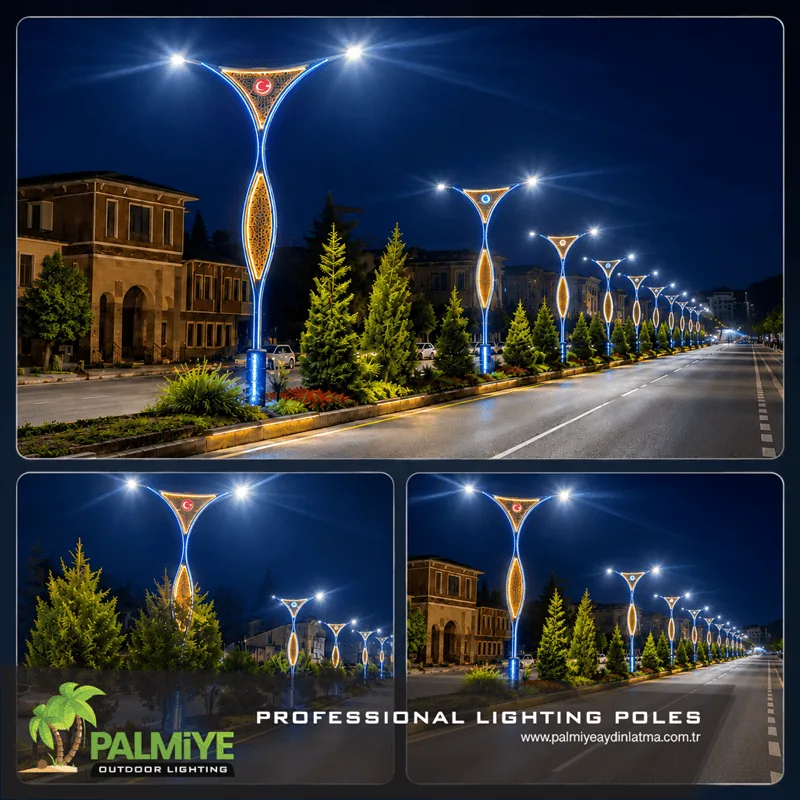
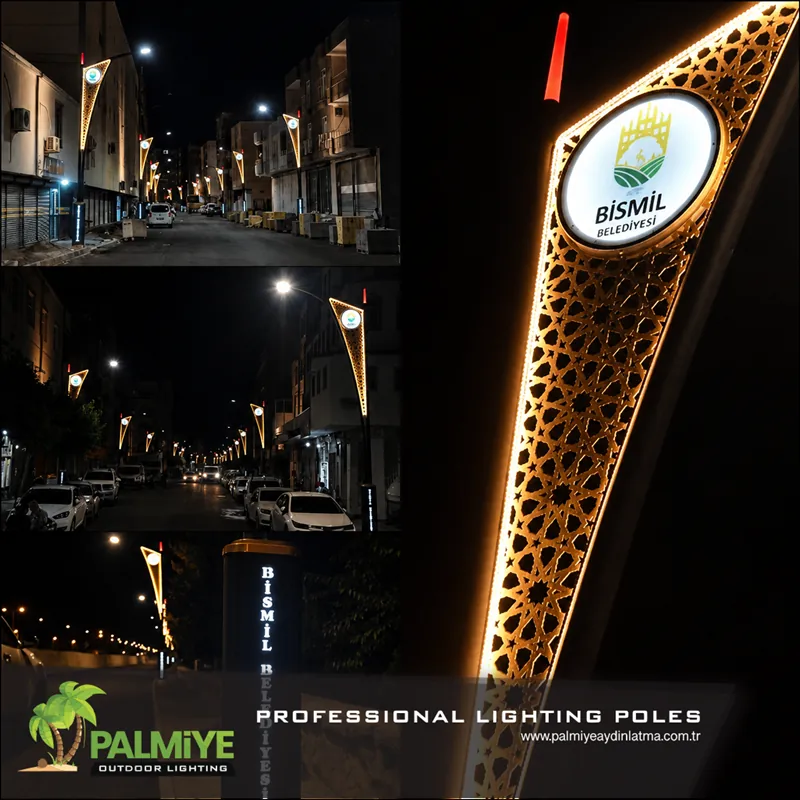
The following original photographs show installations in Türkiye. They illustrate proportions and the relationship between lighting columns and public space, rather than representing South African references. Use your project drawings and calculations to confirm the actual arrangement.
07 / QUOTATION AND HANDOVER
Make the Delivery Scope as Clear as the Product Schedule
Palmiye Lighting manufactures in İstanbul, Türkiye. Send the South African delivery destination, quantities and required phases with the enquiry. State whether the requested price concerns a named port or an agreed inland delivery point. Ask for packing dimensions, weights and the production programme after technical approval.
Allocate freight, import clearance, inland transport, unloading and installation responsibilities explicitly. Give the logistics team’s document checklist before dispatch arrangements are fixed. Transport dates, product availability and any spares package are agreed for the specific order; this page does not imply a local warehouse or a fixed delivery time.
- Submit the consultant’s current specification and drawings.
- List model versions, mounting arrangements, finishes and quantities.
- Resolve document requirements and any proposed alternatives.
- Confirm delivery phases and the named receiving point.
- Agree asset labels, spares and the handover document list.
08 / BUYER QUESTIONS
Turn the Shortlist into an Approved Schedule
Can we coordinate roads and landscaped areas in one order?
Yes. Use separate line items and layouts for each application, with common finishes where the design requires them. Heights and optical arrangements should follow the project review.
Does CE marking confirm South African acceptance?
Do not treat a general marking as automatic acceptance of the whole package. Ask the importer and project reviewer to identify the relevant local product and submission requirements for the exact goods.
How do we shortlist models?
Use the collections or the English catalogue, then send the versions, quantities and consultant’s requirements for a technical enquiry.
09 / REFERENCE AND CONTACT
Keep the Project Evidence Traceable
Reference reviewed 20 October 2026: South African Government: published electrical apparatus compulsory specification notice ↗. Ask the project team to confirm the applicable current requirements and product scope.
Review quality and documentation information ↗ · Explore manufacturing in Türkiye ↗
DIRECT PROJECT ENQUIRIES
Discuss Your Lighting Project in South Africa
Send the specification, equipment schedule and destination to our team for a configuration-specific quotation review.