
PALMIYE LIGHTING · Lighting project guides
How to Plan LED Pole Body Lighting and Functional Road Lighting
An illuminated aluminium pole can contribute to the identity of a street or entrance. A useful project brief describes its decorative body light and its main luminaire separately, then coordinates the two within one installation.
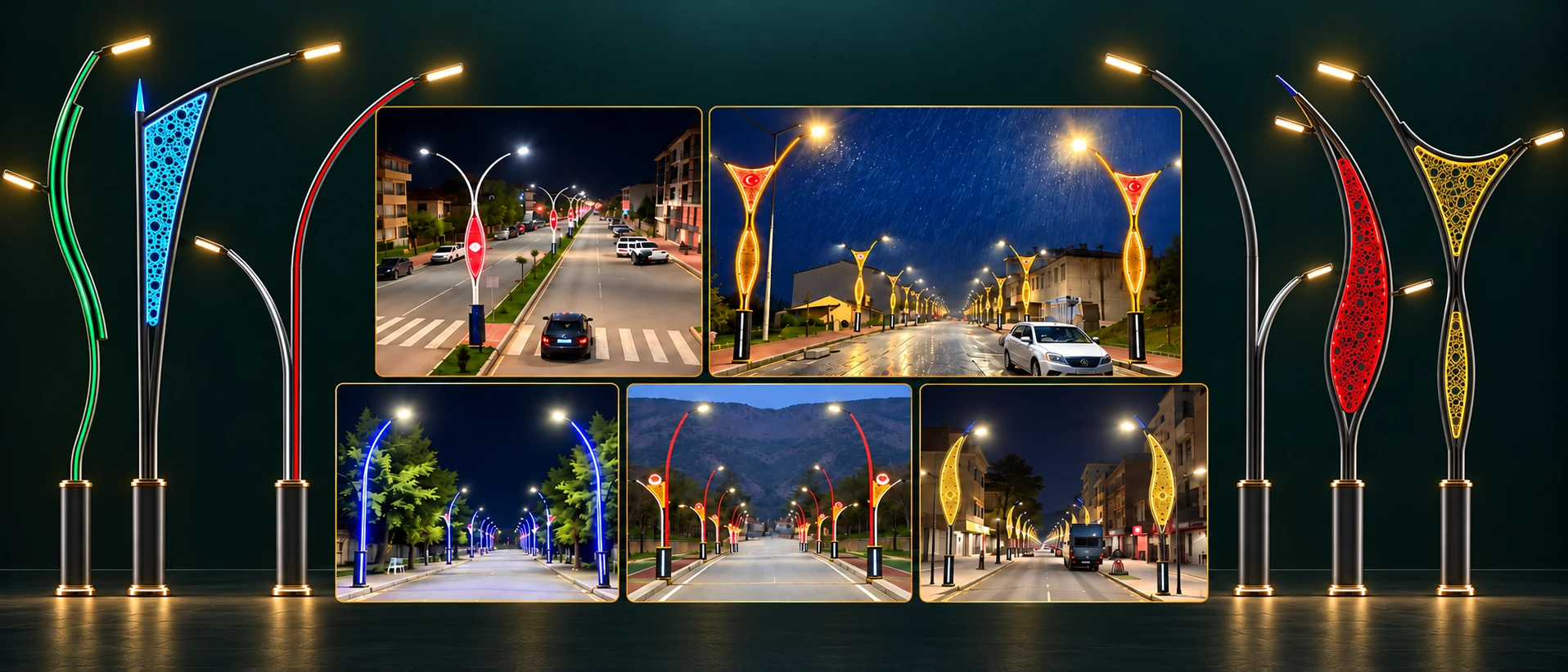
Define two lighting functions
Begin with what people need to see: the road, crossings, walking routes and entrances. The luminaire chosen for those surfaces needs review using the site geometry and appropriate photometric information. Body illumination adds a visible architectural element; its appearance alone does not demonstrate the performance of the main lighting.
Give the two functions separate lines in the equipment schedule. For each pole position, record the main luminaire reference and the intended body-lighting colour or effect. Describe whether their operating hours should be the same or different.
Build a coordinated operating brief
A site may need functional lighting during hours when a decorative effect is reduced or switched off. Write the intended sequence as a project requirement, rather than assuming the catalogue version includes a particular control arrangement. The electrical designer and supplier must confirm the proposed equipment and interfaces.
State the desired colour and visual consistency across phases. Review the appearance from pedestrian routes, seating areas and nearby windows. If a sample is requested, agree the viewing conditions and record which configuration the review covers.
Project checklist
| Schedule item | Information to request | Decision to record |
|---|---|---|
| Main lighting | Luminaire version, photometric information, mounting height and layout. | The arrangement used in the lighting study. |
| Body illumination | Desired colour or effect, operating sequence and component information. | The proposed execution and control responsibilities. |
| Mechanical assembly | Pole, arm, attachments and foundation interfaces. | The configuration submitted for engineering review. |
| Handover | Equipment references, documents, access and requested spare parts. | The agreed supply and maintenance scope. |
Review the complete pole assembly
Include the pole height, arm geometry, luminaire arrangement and every proposed attachment in the engineering brief. Structural and foundation review needs the complete configuration, not only the name of the pole family. For retained foundations, provide the relevant drawings and site measurements.
Describe the specified operating environment and the planned access for maintenance. Confirm the available drawings, replacement components and electrical information for the exact version offered. Do not transfer dimensions, IP/IK values or certificates from a different model.
Separate the reviews before placing the order
Use a lighting review for the useful light on the site, an appearance review for the architectural effect, and an engineering review for the assembly and interfaces. Keep their outcomes linked through the same model and revision references.
The CIE publication on obtrusive outdoor light supports considering unwanted light during design. It is a design reference, not evidence of approval or certification for a Palmiye product. The project team determines the applicable requirements.
Common questions
Does an illuminated body replace the road luminaire?
Specify the decorative effect and the functional lighting task separately. Their suitability must be evaluated for the proposed arrangement.
Can we select a pole from a night photograph?
Use the photograph to shortlist an appearance. Confirm the model version, drawings, lighting data and interfaces before ordering.
What should we send for an export quotation?
Send the layout, quantities, configuration, document list and delivery point. Identify the main luminaire and body illumination as distinct items.
Design reference: CIE 150:2017