
International project & supply guide ↗

PALMIYE LIGHTING · KENYA
Outdoor Lighting Poles for Projects in Kenya
Connect the road layout, pedestrian routes and installation programme before choosing lighting poles. Build a clear equipment package for an urban street, campus or landscaped development in Kenya, with direct enquiries to Palmiye in Türkiye.
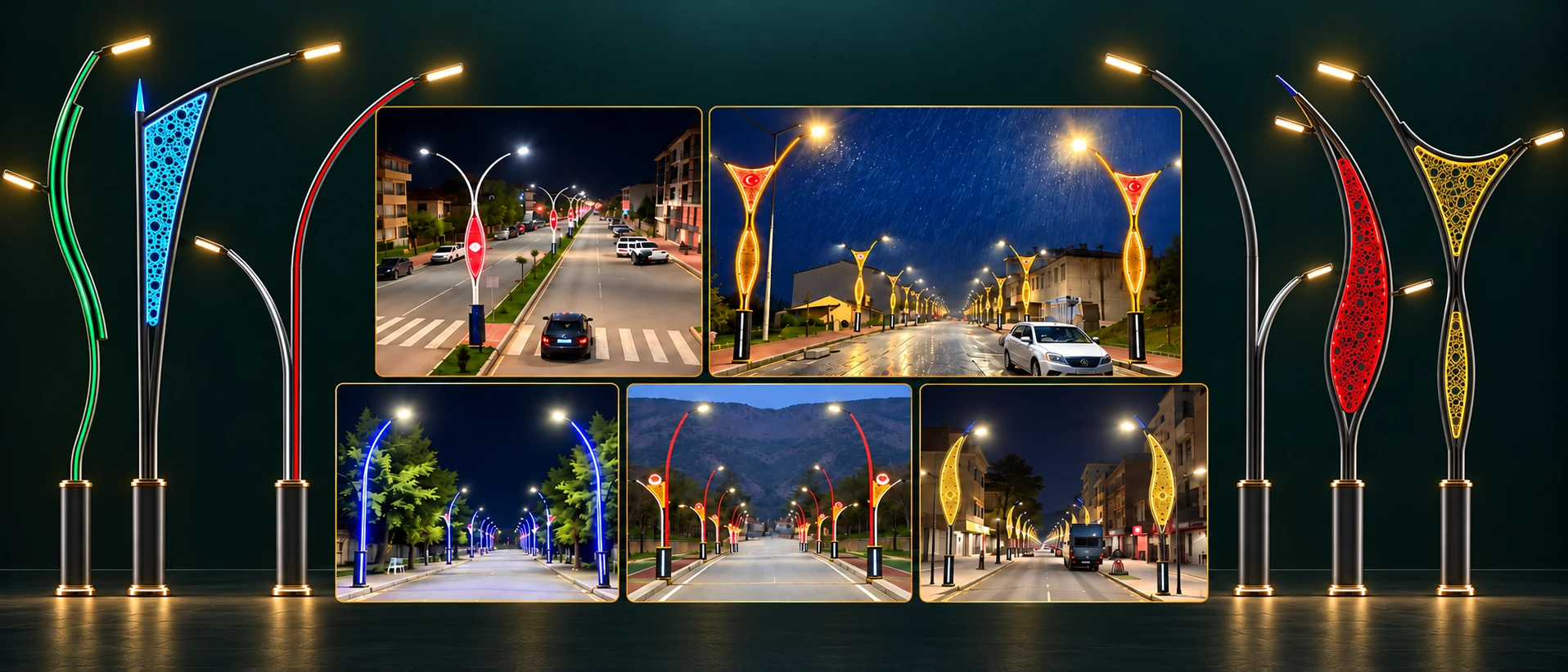
01 / SELECT BY APPLICATION
Bring the Route Plan into the Product Review
For contractors and designers sourcing lighting poles for Kenya, a route drawing is more useful than a quantity alone. Identify the road, footpaths, crossing points and adjoining public spaces. The proposed pole family can then be compared alongside mounting geometry, luminaire distribution and the appearance of the wider development.
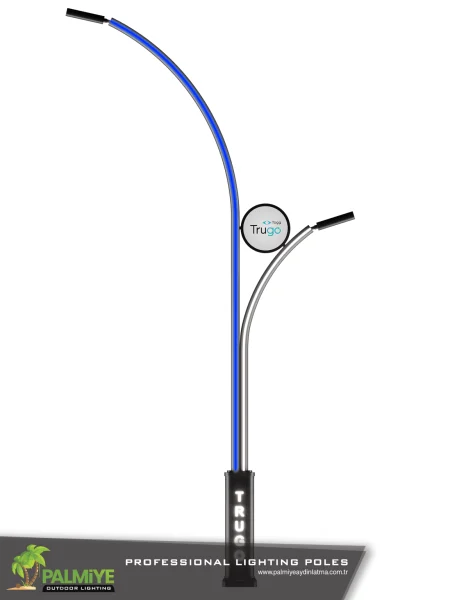
DARG V1
LED-Body Aluminium Poles
Explore aluminium LED-body forms for civic spaces and development entrances; compare the visual effect with the designer’s functional lighting layout.
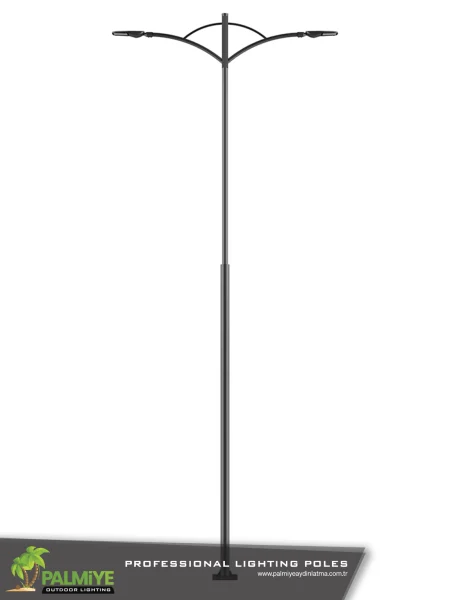
ROAD V2
Galvanised Steel Road Poles
Review road-column options for a numbered route schedule with confirmed mounting heights, outreach and luminaire loads.
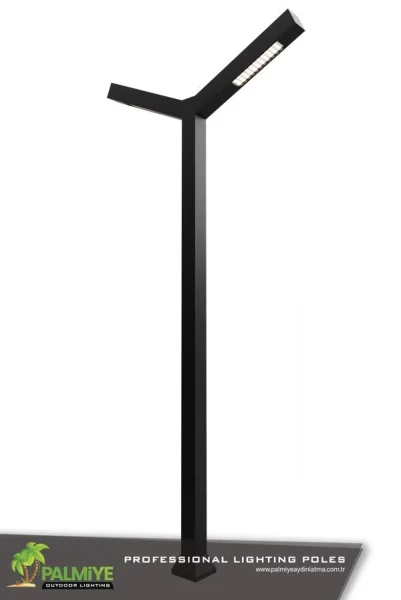
BARDI
Park and Garden Poles
Compare pedestrian-scale models for walkways, landscaped visitor areas and connections between buildings.
For additional applications, browse square and urban lighting, bollards and wall and post-top luminaires. Use model versions in the enquiry so the quoted components can be identified precisely.
02 / ROUTE AND ACCESS WORKSHEET
Coordinate Three Layers of the Project
Prepare separate drawing layers for traffic lighting, pedestrian connections and delivery access. This helps the team distinguish a long road alignment from a compact building entrance or a landscaped path. A change in route width or junction geometry should remain visible in the schedule rather than being hidden within one repeated pole type.
| Project layer | Mark on the drawing | Confirm in the schedule |
|---|---|---|
| Main route | Carriageway, junctions, mounting positions and existing utility constraints. | Column and bracket schedule linked to the luminaire calculations. |
| Pedestrian connection | Crossing points, entrances, paths and adjoining occupied buildings. | Light distribution, glare review and a separate operating schedule where required. |
| Delivery and works area | Truck access, storage space, unloading plant and installation sequence. | Packing groups, named receiving point and responsibility for handling. |
As a practical example, a road package serving a campus may include the main approach, a crossing to the entrance and an internal walk. Give each application its own reference and have the lighting designer confirm the luminaire and arrangement for that location. Matching finishes do not require identical heights or optics.
03 / PUBLIC ROAD INTERFACES
Identify the Reviewing Authority and the Asset Owner
Kenya’s State Department for Roads describes urban-road lighting coordination involving KURA and county governments. For a public project, identify the actual road authority, asset owner and technical reviewer from the tender documents. Do not assume that the same approval route applies to a private development and an adjoining public road.
Ask which drawings, calculations and equipment records must be submitted. Include the approved lighting layout, the specified column requirements and any EN 40 criteria, luminaire photometry and control interfaces. Assign an owner and deadline to each document before confirming the procurement programme.
Keep Existing Infrastructure Identifiable
For replacement works, number the retained poles, foundations and brackets separately from new equipment. Provide condition records and dimensions for engineering review. Reusing foundations requires assessment of the actual geometry and proposed loads; a visual comparison is insufficient.
04 / ENVIRONMENT AND SERVICE ACCESS
Describe the Installation Conditions for Each Location
A Kenya enquiry should state the actual site conditions rather than using a national climate assumption. For a coastal location, include the exposure brief and proposed maintenance regime. For an inland or exposed site, provide the specified operating range, dust conditions and the engineer’s wind criteria. Identify drainage and cable-entry constraints around the base.
Request confirmation of the material, corrosion protection and component suitability for the exact configuration. Include the weight and projected area of luminaires, brackets and other attached equipment in the structural review. Show how maintenance teams can reach the column and which service clearances must remain available.
List supply, earthing, switching and dimming requirements from the electrical designer. Where LED-body illumination is included, record its load and intended operation separately from the road luminaire. This keeps functional lighting, architectural effect and controls clear in the quotation.
05 / BEFORE SHIPPING
Coordinate Product Evidence with the Import Team
The Kenya Bureau of Standards describes PVoC as a conformity-assessment process undertaken in exporting countries against applicable standards, regulations or approved specifications. Give your importer and appointed inspection provider the proposed equipment list early and ask them to confirm the requirements for the actual shipment.
Request the relevant product documents before fixing the dispatch programme. Identify who arranges any required inspection, who supplies supporting evidence and who approves the final paperwork. This page does not claim a KEBS approval or a Certificate of Conformity for a Palmiye model or consignment.
State the named port or delivery destination and the onward route to the site. Ask for packing dimensions, weights and phase labels. The quotation should distinguish freight, destination clearance, inland haulage, unloading and installation responsibilities. Production and transport dates are agreed for the specific order.
06 / ORIGINAL APPLICATION PHOTOGRAPHY
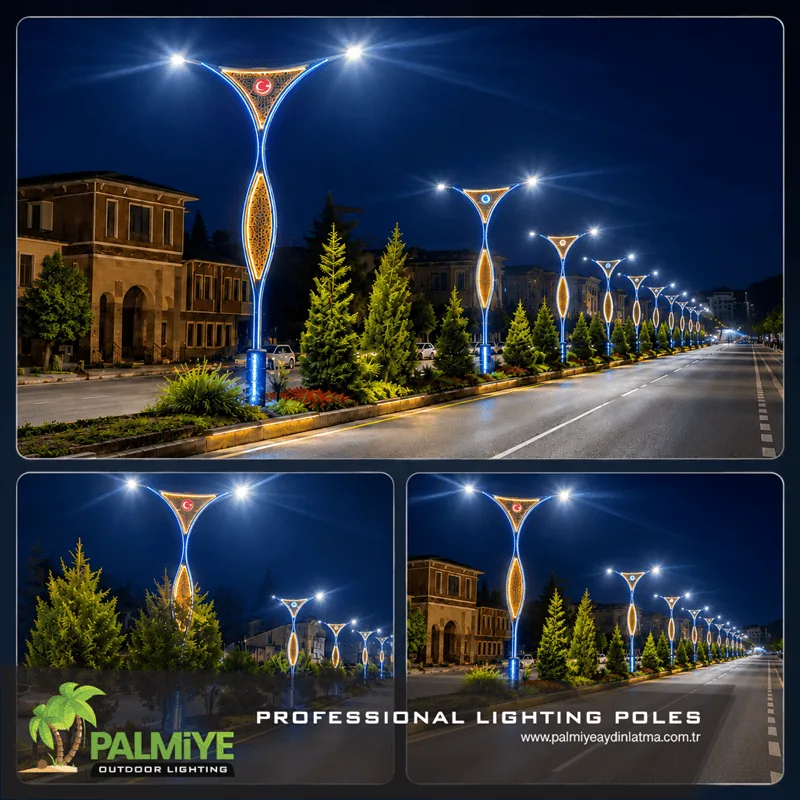
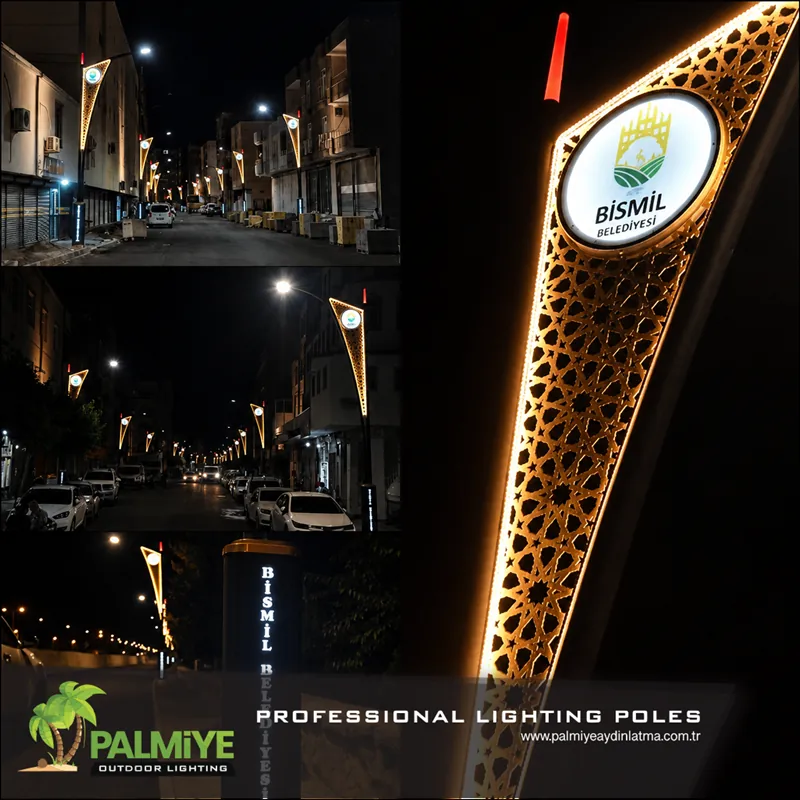
See Completed Installations in Türkiye
Use these real installation photographs to compare proportions and the relationship between poles and public spaces. Their locations are in Türkiye, and they are not presented as Kenya project references. Your own geometry and lighting calculations remain the basis for equipment selection.
07 / PROJECT QUESTIONS
Prepare the Next Technical Conversation
Can the order include road and pedestrian lighting?
Yes. Separate the applications, model references and quantities in the schedule and attach the lighting layout for each zone. That gives the product review a clear technical basis.
Can we choose a pole before completing the lighting layout?
A design shortlist can be prepared first, but the final height, bracket and luminaire arrangement should be coordinated with the designer’s calculations and the engineer’s loads before approval.
Do you have a warehouse in Kenya?
This page supports direct project enquiries to our manufacturing team in Türkiye. It does not represent a Kenya office or local-stock offer. The quotation confirms production and delivery scope for the order.
What should accompany the initial enquiry?
Send the site plan, point schedule, quantities and technical document list with the delivery destination. Choose starting model references from the English catalogue or the collections above.
08 / LOCAL PROJECT REFERENCES
Official Reading and Direct Factory Contact
Sources reviewed 20 October 2026. Check the documents relevant to your contract with the project reviewer and local import team.
Explore our manufacturing process ↗ · Review documentation information ↗
SEND THE ROUTE AND POINT SCHEDULE
Discuss Your Lighting Project in Kenya
Contact our team in İstanbul with your project drawings, equipment shortlist and delivery requirements.